
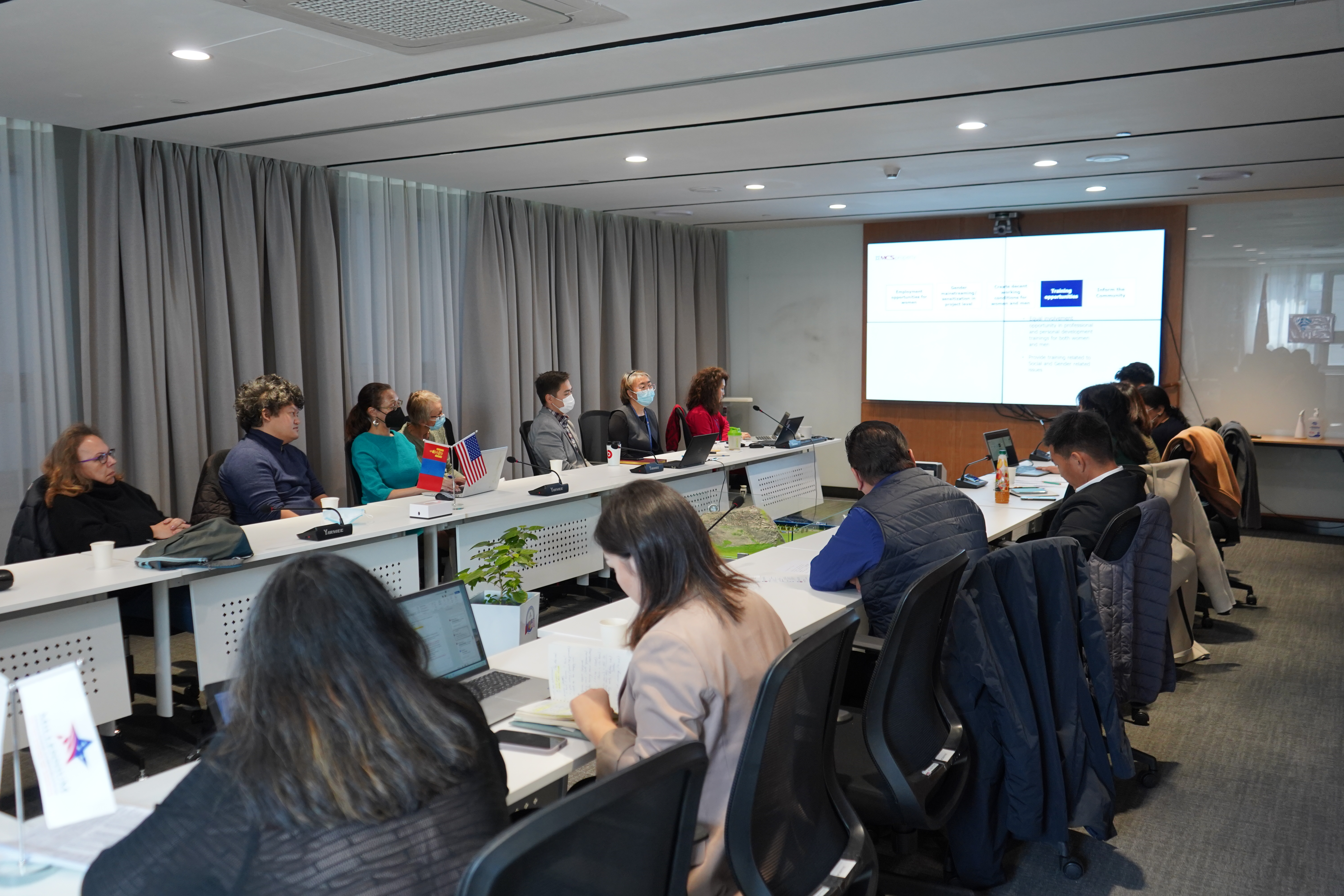
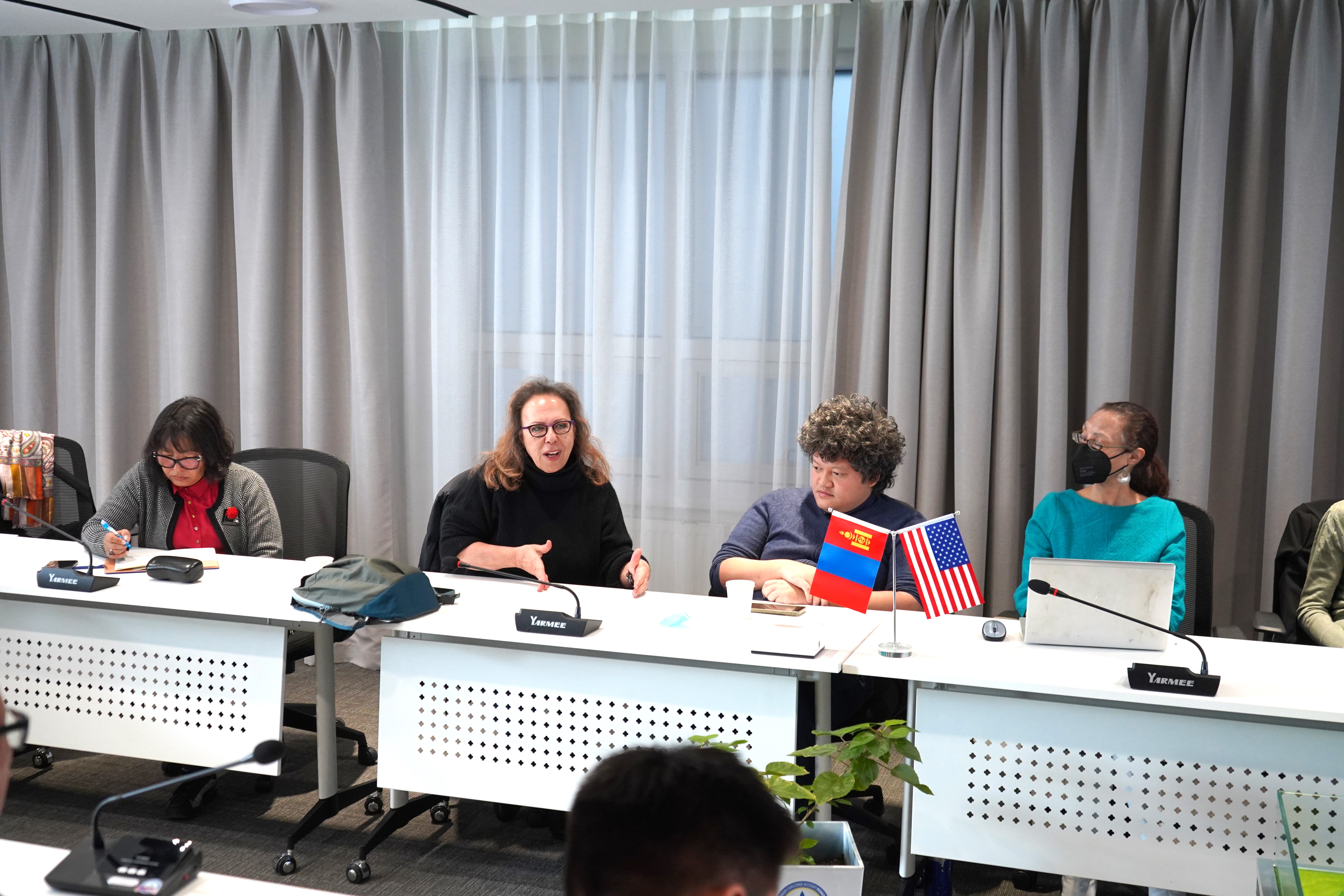
Ulaanbaatar city, October 7, 2022 – MCA-Mongolia organized a round table discussion on the topic "Increasing the Employment of Women in the Construction Sector” on October 3, 2022 and representatives from MCA-Mongolia contractors such as “MAPA Insaat”, a Turkish company, “Baran Group”, from Israel and local company “MCS Properties”, officials from the Labor Welfare Department of Khan-Uul and Songinokhairkhan Districts which are considered as project-affected areas and relevant directors and specialists from MCC and MCA-Mongolia.
In the beginning, Mrs. Sharon Rogers, MCC Director of Social and Gender Inclusion, showcased some best practices for implementing gender and social considerations by other MCA contractors worldwide. She highlighted "The percentage of women in the construction sector in Mongolia is not low compared to the international average. However, the big investments in Mongolia's construction industry shall be guided and spent to set a standard for human development and well-being through preparing a skilled workforce, increasing job creation, and improving women's earning opportunities in particular”. Participants shared their experiences, discussed the challenges they faced, and identified some solutions for cooperation during the roundtable discussion.
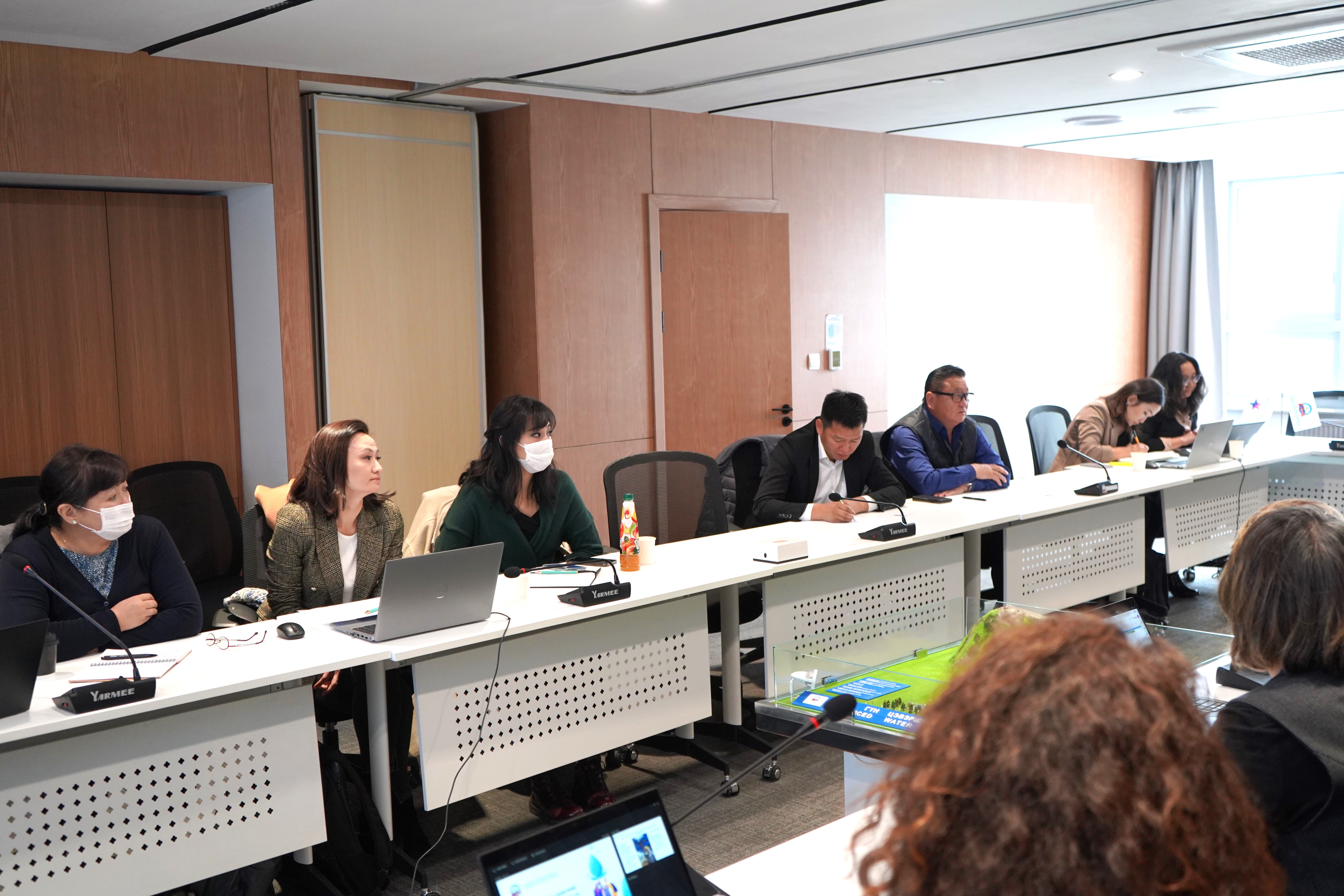
As of 2021, the employment rate of women in Mongolia's construction sector was about 17% ("Is it only a man's world?" German Cooperation Association, 2021). The factors for this low rate were identified as a lack of female worker-friendly workplace conditions, gender-sensitive human resource policies, and the lack of a skilled-female workforce.
MCA-Mongolia has been implementing infrastructure projects to improve water supply in Ulaanbaatar under the MCC-Mongolia Water Compact. The requirements related to social and gender considerations are included in the bidding documents so that each contracting company is expected to meet them at all stages of the project implementation. In particular, the objective of increasing the number of women working in the construction sector to 30 percent of the total workforce was set for all contractors to reflect this in their policies and operations.
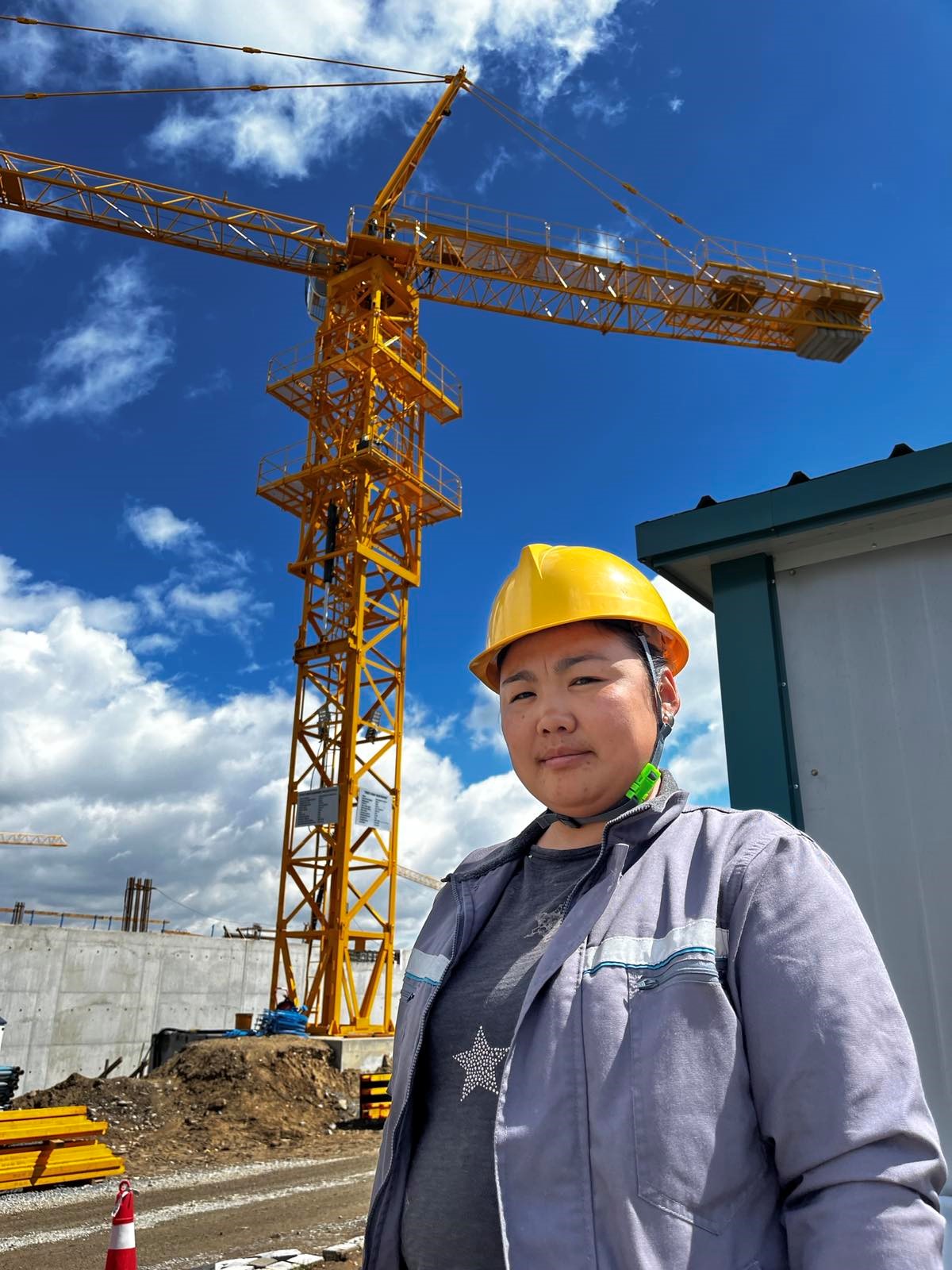
Below is a story of a woman who works as a crane operator for MAPA INSAAT, a Turkish company is constructing the Advanced Water Purification Plant as a contractor with the MCA-Mongolia under the MCC-Mongolia Water Compact. The plant is going to be in full operation in Quarter I, 2024.
WOMEN IN THE CONSTRUCTION SECTOR
|
B.Nyamkhuu decided to shift her career from working as a Goldsmith to becoming a crane operator 7 years ago. The profession of - Crane operator is traditionally pursued by men in Mongolia. She was trained in a vocational training center for a year to be a licensed crane operator. She shared her story that it was her husband who encouraged and supported her to make this career shift. Within her career, B.Nyamkhuu has worked on various construction sites and working environments. Compared to her previous experiences she finds that MAPA has given a good amount of effort to provide a pleasant workplace for its national and domestic workers where she also deepens her technical knowledge and experience from her Turkish colleagues.
“Working with Turkish experts has been very much engaging to me. Although we speak different languages, we manage to understand each other using international crane hand signals. As a female employee, I don’t feel disadvantaged in any way. On the contrary, everyone on site shows respect and esteem to one another, and the working conditions are encouraging for female workers in particular”. B.Nyamkhuu |
B.Nyamkhuu: “I truly embrace the fact that women are increasingly interested in becoming crane operators in recent years. Because there is actually nothing in the job profile that cannot be done by a woman about operating a crane”.
|
###
This $462 million project is a partnership between the American and Mongolian people made possible by $350m in MCC grant funding and the $111.76m contribution from the Government of Mongolia which demonstrates their commitment to working together to achieve economic growth and poverty reduction in Ulaanbaatar. The Mongolia Water Compact is funding major infrastructure projects, including the construction of new wellfields and two large plants - an Advanced Water Purification Plant and Wastewater Recycling Plant which will be the first of their kind in Mongolia. In addition, the Compact will invest in policy measures to create a financially and environmentally sustainable future for the water sector of Ulaanbaatar. By 2026, the water system in Ulaanbaatar will have been expanded to deliver 80% more drinking water, allowing for the city’s future expansion.