
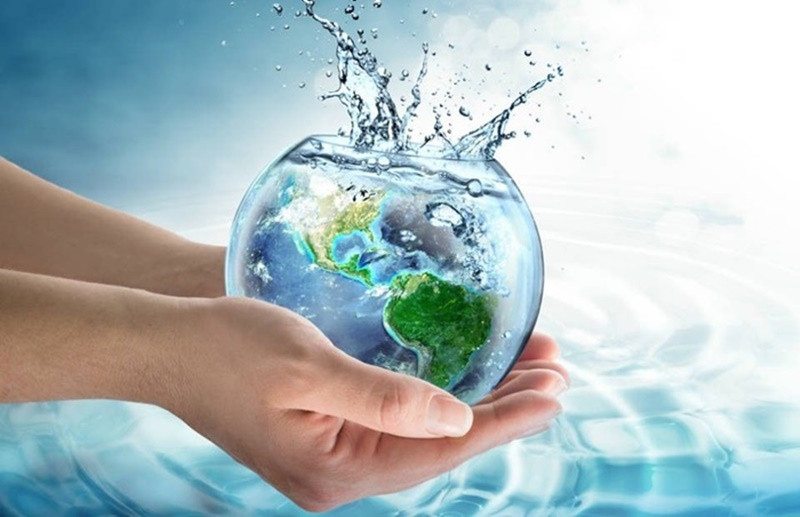
The city where you live may be the next to run out of water. Regions of the world are increasingly vulnerable to a severe water crisis scenario. Factors such as population growth and increased demands, pollution, governance problems, losses and waste, climate change, and decline in the volume of rainfall are among the main contributions to raising the risk of water in cities.
Cities around the world are facing increasingly intense droughts with high temperatures and a drastic water reduction in the volume of the reservoirs.
In 2013, the state of California has faced a major drought that has continued for 120 years causing a severe reduction in consumption, cutting the supply of water to cities and agricultural production.
Australia faced the drought of the millennium (2000-2010), which required an entire restructuring of the water production, involving companies and governments associated with re-education for economic consumption by the population.
Are we really getting ready to avoid missing water in our cities? Are policies considering effective initiatives for the management of the risk of water collapse? Are institutions responsible for the governance of water using the existing legal mechanisms to promote rational and democratic use of this natural resource? Have investments in science and efficient technologies been sufficient to define and validate alternatives to the water crisis? It is what we will discuss throughout this post.
SOLUTIONS TO THE WATER CRISES IN CITIES
Countries like the United States, Australia and Singapore have adopted decisive and systematic measures to overcome the water crisis. The following are the top 10 lessons we can learn from these countries for the conservation and sustainable use of water will be displayed.
4) REDUCTION OF WATER POLLUTION
Some developed countries have successful experiences of sewage treatment and water reuse for several purposes, such as industrial use, recovery of river sources and use in household cleaning.
According to a study by the National Water Agency (ANA), the sewage generated by 45% of the Brazilian population does not receive any kind of treatment, increasing the risk of pollution and contamination of rivers, lakes and other water sources where the tailings are launched. The final disposal of sewage in water reserves compromises the use of water, cause harm to public health and ecosystems.
5) COMBATING WATER WASTE
Since 2010, ensuring access to clean water and sanitation is considered a universal human right by the United Nations (UN). However, almost 900 million people worldwide do not have access to clean water sources. In many places, water for the demand exceeds the sustainable supply, with serious consequences in the big cities, facing periods of severe shortages affecting the poor.
The scarcity scenario is marked, paradoxically, by the culture of the abundance of water, which leads to losses and waste. As mentioned above, a percentage of piped drinking water in Brazil is lost through leaks in the distribution system and illegal connections.
The Papal Encyclical on Environment, published in 2015 by Pope Francisco, pointed out that the water problem is educational and cultural. As waste predominates, it is important to become aware of the seriousness of the profligate behavior of a great inequality context.
In Brazil, it is urgent to invest in changing the culture of the paradigm of abundance by environmental awareness. This can be done through systematic campaigns in the media and in schools, to change people’s habits, as well as the public sector and business. Moreover, decreasing losses in water distribution systems for human consumption is critical to ensure the rational and sustainable use of this natural resource.
6) REDUCTION OF FLOODING
Singapore, one of the world ‘s two largest examples in water management, implemented an urban collection system of rainwater on a large scale for use in the supply of the population. It was a way to enjoy another water source and reduce the burden on traditional systems of water supply for the population. Another benefit is that accumulating rainwater helps to prevent flooding during the storms.
https://letrasambientais.com.br/posts/10-licoes-dos-paises-lideres-em-gestao-sustentavel-das-aguas
To be continued.