
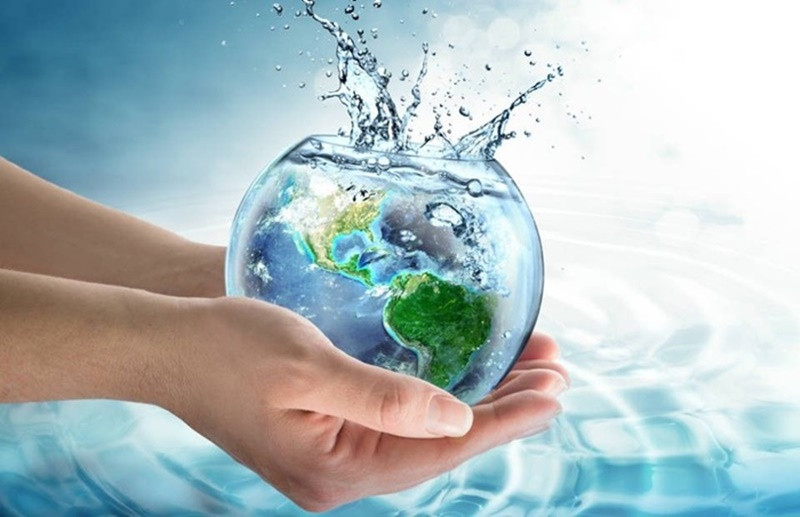
The city where you live may be the next to run out of water. Regions of the world are increasingly vulnerable to a severe water crisis scenario. Factors such as population growth and increased demands, pollution, governance problems, losses and waste, climate change and decline in the volume of rainfall are among the main contributions to raising the risk of water in cities.
Cities around the world are facing increasingly intense droughts with high temperatures and a drastic water reduction in the volume of the reservoirs.
In 2013, the state of California has faced a major drought that has continued for 120 years causing severe reduction in consumption, cutting the supply of water to cities and agricultural production.
Australia faced the drought of the millennium (2000-2010), which required an entire restructuring of the water production, involving companies and governments associated with re-education for economic consumption by the population.
Are we really getting ready to avoid missing water in our cities? Are policies considering effective initiatives for the management of the risk of water collapse? Are institutions responsible for the governance of water using the existing legal mechanisms to promote rational and democratic use of this natural resource? Have investments in science and efficient technologies been sufficient to define and validate alternatives to the water crisis? It is what we will discuss throughout this post.
SOLUTIONS TO THE WATER CRISES IN CITIES
Countries like the United States, Australia and Singapore have adopted decisive and systematic measures to overcome the water crisis. The following are the top 10 lessons we can learn from these countries for the conservation and sustainable use of water will be displayed.
1) WATER EFFICIENCY AND ENERGY
Initiatives on water and energy efficiency are widely encouraged by governments in these developed countries. People who save water and energy, adopting efficient equipment in their homes, receive awards and grants from their governments to pay the costs of these devices.
In Brazil, the energy issue is directly linked to the water crisis, due to much of the production in the country is waterborne. However, the population does not receive any encouragement from the government to the rational use of water and energy. For example, the city of Campina Grande with over 400 thousand inhabitants was on the verge of water collapse, greatly interfering with its production capacity in 2017. However, the population itself had to pay for alternatives to go through a rigorous water rationing and economic losses.
2) ENVIRONMENTAL EDUCATION
In some developed countries, there is a huge awareness among the population, enterprises and governments on the importance of water. Children learn to rationally use this natural resource in school. The aim is to change people’s habits to adapt to water scarcity in order to reduce consumption.
Singapore has adopted a strategy of massive water saving, in order to reduce the country’s water consumption of 151 liters per person per day to 147 liters by 2020. In a quick comparison, the average daily water consumption in the US is 378 liters per person, while in Brazil it is 166 liters.
The media played a key role in this process, offering programs to sensitize the public from adults to children, the importance of water. The video above is a TV commercial in Singapore, showing the importance of saving water.
Singapore was considered as one of the countries with the highest risk of water in the world. However, systematic strategies for obtaining alternative sources of water (desalination, rainwater recovery and recycling of water), associated with a massive campaign to reduce consumption by the population, placed the country as a world leader in water management.
3) AWARENESS OF THE NATURAL RESOURCES
A striking feature of some developed countries is the protection of the health of springs, rivers and natural water sources. With this initiation, part of recycled and treated water is used to restore and maintain these water reserves. The proposal is to reconcile economic interests with environmental conservation.
In Brazil, rivers are not protected. The São Francisco River, which plays a fundamental role in the development of the Brazilian semiarid region, is being intensively exploited without their proper recovery and revitalization, subject to constant droughts. Water reserves, like the rivers, have functioned as true garbage dumps and sewage often dumped at the site by the population. This situation is common to all regions of the country. The costs for the pollution of rivers by industries and companies should be fully charged and paid by them in order to control the emission of waste on the bodies of water.
https://letrasambientais.com.br/posts/10-licoes-dos-paises-lideres-em-gestao-sustentavel-das-aguas
To be continued.